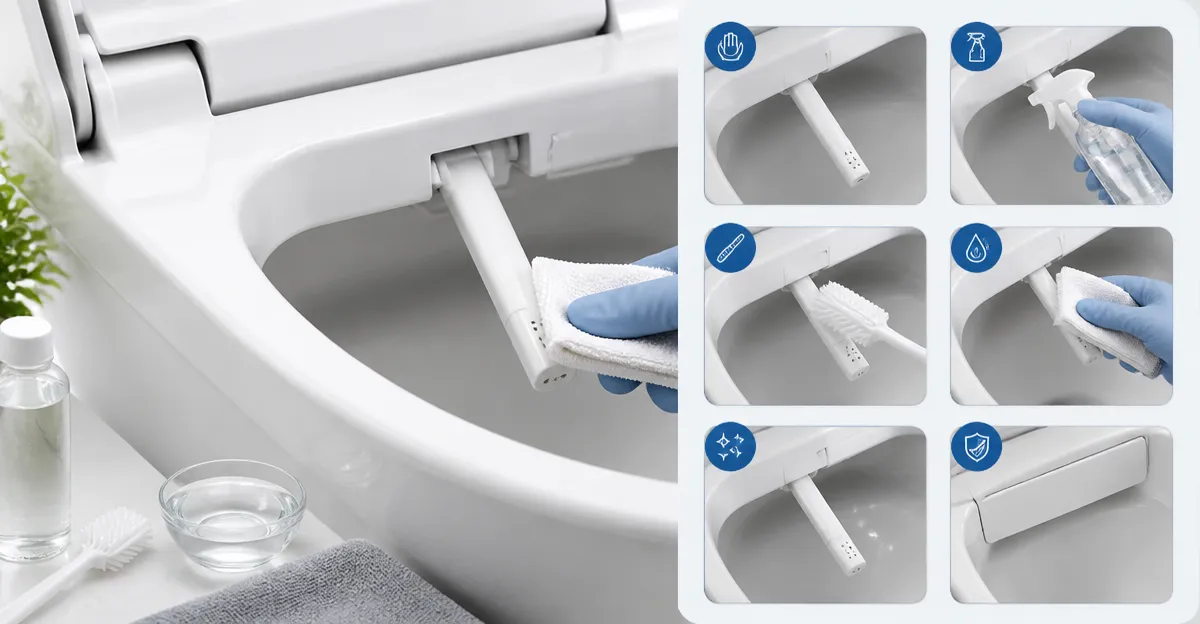
How to Clean a Bidet Nozzle: Easy Step-by-Step Instructions to Sanitize, Deodorize & Prevent Clogs
The reader will learn a systematic method to clean a bidet nozzle, remove mineral deposits, eliminate odors, and avoid future blockages. Maintaining a clean nozzle extends the life of the fixture and improves personal hygiene. This guide presents practical actions that can be performed without professional assistance. The information is valuable for homeowners, renters, and caregivers who seek a reliable cleaning routine.
What You'll Need
- White distilled vinegar or a mild citrus‑based descaler
- Soft‑bristled brush or old toothbrush
- Micro‑fiber cloths
- Rubber gloves (optional for skin protection)
- Adjustable wrench or pliers (if valve removal is required)
- Replacement nozzle heads – consider the Mudder Bidet Sprayer Heads 2-Pack (price $12.99, rating 4.3/5 from 2,568 reviews)
- Functional handheld bidet for testing water flow – the Arofa Handheld Bidet Sprayer (price $25.49, rating 4.5/5 from 27,024 reviews) is a suitable choice
Step 1: Disconnect the Sprayer (If Necessary)
Before cleaning, turn off the water supply at the shut‑off valve located behind the toilet. Open the flush handle to release any residual pressure. Use an adjustable wrench to loosen the T‑valve coupling, taking care not to damage the brass threads. Place a bucket beneath the connection to catch any drips. This step ensures that the nozzle can be removed safely and that cleaning solution will not leak onto the floor.
Step 2: Prepare a Vinegar Soak
Fill a container with equal parts white distilled vinegar and warm water. Vinegar dissolves calcium scale and soap residue without harming stainless steel components. Submerge the nozzle head in the solution for fifteen to twenty minutes. For heavily encrusted nozzles, extend the soak to thirty minutes. The acidic environment loosens deposits, making subsequent scrubbing more effective.
Step 3: Scrub the Nozzle Thoroughly
After soaking, remove the nozzle and use a soft‑bristled brush to clean the interior openings. Gently rotate the brush to reach all micro‑holes, avoiding damage to the spray tip. For stubborn buildup, dip the brush in undiluted vinegar and repeat the motion. Wipe the outer surface with a micro‑fiber cloth dampened in the same solution. This action removes biofilm, eliminates lingering odors, and prepares the nozzle for a clear rinse.
Step 4: Rinse and Deodorize
Rinse the nozzle under running warm water for at least one minute to flush out loosened particles. To deodorize, fill a spray bottle with a mixture of water and a few drops of tea tree oil; spray the interior and let it sit for five minutes before a final rinse. Tea tree oil provides natural antimicrobial properties and leaves a fresh scent without harsh chemicals.
Step 5: Dry and Inspect for Damage
Pat the nozzle dry with a clean micro‑fiber cloth, ensuring that no moisture remains in the spray tip. Inspect the nozzle for cracks, corrosion, or worn seals. If any damage is observed, replace the nozzle head with a new unit. The Mudder Bidet Sprayer Heads 2-Pack offers stainless steel construction, 304 grade material, and an ergonomic grip that fits standard 7/8‑inch T‑valves.
Step 6: Reinstall the Sprayer
Reattach the cleaned or replacement nozzle to the T‑valve, tightening the coupling by hand and then securing it with a wrench for an additional quarter turn. Ensure the seal is tight to prevent drips. Turn the water supply back on slowly and check for leaks around the connection. A leak‑free seal indicates proper installation.
Step 7: Test Functionality with a Handheld Bidet
Activate the water supply and operate the Arofa Handheld Bidet Sprayer to verify water pressure and spray pattern. Adjust the lever to test both gentle and jet modes. A smooth transition confirms that the nozzle is clear and that the internal valve operates correctly. If the spray is uneven, repeat the cleaning process or consider a replacement.
Tips & Pro Tips
- Perform routine cleaning every three months to prevent mineral buildup in hard‑water areas.
- Use a water softener or install an inline filter if the household water contains high calcium levels.
- When cleaning multiple bidet fixtures, keep a labeled container for each so that solutions do not cross‑contaminate.
- Never use abrasive pads or harsh chemicals such as bleach, as they can erode the stainless steel finish and compromise the seal.
- For travelers or renters, the LUFEIDRA Handheld Bidet Sprayer (price $19.98, rating 4.5/5 from 6,219 reviews) provides a portable solution that can be installed without tools and removed without damage.
Troubleshooting
Problem: Water continues to drip after reassembly.
Solution: Verify that the T‑valve O‑ring is seated correctly and that the coupling is tightened to the recommended torque. Replace the O‑ring if it appears flattened.
Problem: Spray pattern is weak or sputters.
Solution: Disassemble the nozzle again and repeat the vinegar soak. If the issue persists, replace the nozzle with a new head such as the Vayzluiy Handheld Bidet Sprayer (price $15.98, rating 4.5/5 from 2,812 reviews) which features an adjustable flow control and a leak‑proof braided hose.
Conclusion
By following the outlined steps, one can effectively sanitize, deodorize, and protect a bidet nozzle from future clogs. Regular maintenance reduces the need for costly replacements and enhances overall bathroom hygiene. The recommended tools, such as the BRITULIF Handheld Bidet Sprayer (price $19.99, rating 4.6/5 from 5,884 reviews), provide reliable performance for testing and daily use. Implementing this routine will ensure a fresh, efficient, and long‑lasting bidet experience.
Products Mentioned in This Guide
Frequently Asked Questions
How often should I clean my bidet nozzle?
Clean the nozzle every 1‑2 weeks to prevent mineral buildup and odors.
Can I use regular household vinegar to descale a bidet nozzle?
Yes, white distilled vinegar or a mild citrus‑based descaler works safely for most nozzles.
Do I need to remove the nozzle to clean it thoroughly?
Removing the nozzle with an adjustable wrench allows full access, but a soft brush can clean in place for light deposits.
What tools are best for scrubbing mineral deposits off a nozzle?
A soft‑bristled brush or an old toothbrush gently removes deposits without scratching the metal.
How can I prevent clogs after cleaning the bidet nozzle?
Rinse the nozzle with clean water, dry with a micro‑fiber cloth, and regularly descale to keep passages clear.