Introduction
This guide explains how water hardness leads to mineral buildup on bidet nozzles, why that matters for hygiene, and what homeowners can do to clean and prevent it. Readers will learn the chemistry behind hard water, practical cleaning routines, and how to select bidet accessories that minimise maintenance. The article also recommends five Amazon‑listed products that perform well in hard‑water environments. By the end, one will be able to keep a bidet nozzle sparkling clean without excessive effort.
Background and Context
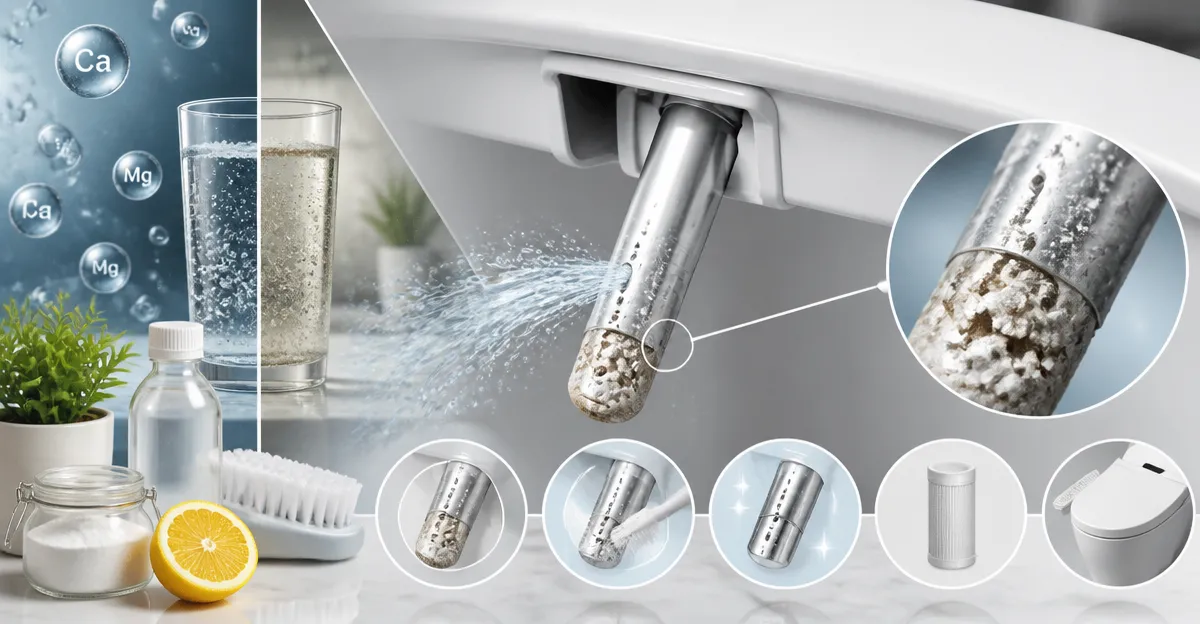
Hard water contains elevated concentrations of calcium and magnesium ions, typically measured in grains per gallon (gpg) or parts per million (ppm). When water evaporates, these minerals precipitate as scale, forming a white, crusty film on metal and plastic surfaces. Bidet nozzles are especially vulnerable because they expose a small aperture to a continuous stream of water, allowing scale to accumulate quickly. Over time, scale reduces water flow, alters spray patterns, and can harbour bacteria.
Understanding the source of hardness helps in selecting the right preventative equipment. Municipal water supplies often report hardness levels; values above 7 gpg are considered hard, and values above 10 gpg are very hard. Households with well water may experience even higher concentrations, making regular maintenance essential.
In addition to mineral deposits, hard water can cause corrosion of metal components, especially if the water also contains high acidity. Modern bidet designs use ceramic valves and stainless‑steel housings to mitigate corrosion, but scale remains a persistent issue.
Key Concepts and Strategies
1. How Mineral Buildup Forms on Nozzles
When water exits the nozzle, it creates a fine mist that quickly evaporates. The residual calcium and magnesium ions remain on the nozzle surface, bonding to the material. Repeated cycles of evaporation and re‑wetting cause a layered buildup that is difficult to remove with plain water.
Scale not only blocks the nozzle aperture but also changes the spray angle, leading to uneven cleaning performance. In severe cases, the nozzle may become clogged, requiring disassembly or replacement.
2. Effective Cleaning Methods
Several cleaning agents dissolve calcium carbonate efficiently. White vinegar (5% acetic acid) is the most accessible, while commercial descalers contain stronger acids such as citric or sulfamic acid. The cleaning process typically follows these steps:
- Detach the nozzle if the design allows removal.
- Soak the nozzle in a 1:1 solution of white vinegar and water for 30‑60 minutes.
- Rinse thoroughly with clean water and test the spray.
- For stubborn deposits, repeat the soak or use a soft brush to gently scrub the aperture.
Never use abrasive pads, as they can scratch the nozzle surface and create micro‑grooves where scale can embed.
3. Preventative Measures
Prevention is more efficient than remediation. The most common strategies include installing a water softener, attaching an in‑line filter, or selecting a bidet model with self‑cleaning features. A water softener replaces calcium and magnesium ions with sodium, dramatically reducing scale formation. In‑line filters equipped with activated carbon or KDF media can also capture minerals before they reach the nozzle.
Regular maintenance, such as a monthly vinegar soak, keeps scale from reaching a problematic thickness. Combining a softener with a quick‑clean routine provides the best long‑term results.
4. Product Recommendations for Hard‑Water Environments
Below are five products that perform well in areas with hard water. Each product description includes price, rating, and a key feature that addresses mineral buildup.
- LUXE Bidet NEO 120 – Priced at $39.99 with a 4.6‑star rating (102,953 reviews). Its self‑cleaning nozzle and ceramic valve minimise scale adhesion, making it ideal for hard‑water households.
- BRITULIF Handheld Bidet Sprayer – $25.99, 4.6‑star rating (5,995 reviews). The stainless‑steel body and leak‑free design prevent mineral deposits from seeping into connections.
- Arofa Handheld Bidet Sprayer – $29.99, 4.5‑star rating (23,417 reviews). Its brass valve and 304 stainless steel components resist corrosion and scale buildup.
- Pugrwei Stainless Steel Bidet Sprayer – $18.94, 4.5‑star rating (6,843 reviews). The high‑grade EPDM hose and stainless steel construction provide leak‑free operation even with mineral‑rich water.
- Lambloraey Stainless Steel Bidet Sprayer – $7.99, 4.6‑star rating (84 reviews). Its SUS304 stainless steel head offers excellent resistance to scaling at a budget price.
Comparison and Selection Guide
Choosing the right bidet accessory depends on installation preferences, budget, and the severity of water hardness. The table below summarises the five featured products.
| Product | Type | Price | Rating | Hard‑Water Feature |
|---|---|---|---|---|
| LUXE Bidet NEO 120 | Bidet attachment | $39.99 | 4.6/5 | Self‑cleaning nozzle, ceramic valve |
| BRITULIF Handheld Sprayer | Handheld | $25.99 | 4.6/5 | Stainless steel body, leak‑free cartridge |
| Arofa Handheld Sprayer | Handheld | $29.99 | 4.5/5 | Brass valve, 304 stainless steel |
| Pugrwei Sprayer | Handheld | $18.94 | 4.5/5 | EPDM hose, stainless steel |
| Lambloraey Sprayer | Handheld | $7.99 | 4.6/5 | SUS304 stainless steel, low‑cost |
For households that prefer a permanent fixture, the LUXE Bidet NEO 120 offers built‑in self‑cleaning functionality, reducing the frequency of manual descaling. Handheld models such as the BRITULIF or Arofa provide flexibility for users with limited mobility and are easier to detach for occasional deep cleaning.
Best Practices & Tips
- Perform a monthly soak: Detach the nozzle (if possible) and immerse it in a 1:1 vinegar‑water solution for at least 30 minutes.
- Install an in‑line water softener: A system rated for 10,000 grains capacity will typically eliminate visible scale within weeks.
- Use a quick‑flush routine: After each bidet use, run a brief burst of water through the nozzle to prevent mineral settling.
- Check T‑valves regularly: For handheld kits, ensure the T‑valve is fully closed when not in use to avoid back‑pressure damage.
- Replace hoses annually: Even stainless steel hoses can develop micro‑leaks that allow mineral‑laden water to accumulate.
Frequently Asked Questions
- What is the difference between hard and soft water?
- Hard water contains high levels of calcium and magnesium; soft water has these minerals replaced by sodium or potassium, reducing scale formation.
- Can I use lemon juice instead of vinegar?
- Yes, lemon juice’s citric acid works similarly, but it may leave a scent. Vinegar is generally more cost‑effective for regular use.
- How often should I descale my bidet nozzle?
- In moderately hard water (7‑10 gpg), a monthly cleaning is sufficient. In very hard water (>10 gpg), a bi‑weekly schedule is recommended.
- Will a water softener affect the taste of drinking water?
- Softened water may have a slight salty taste due to sodium exchange. Many households use a separate line for drinking water to avoid this.
- Are self‑cleaning bidets completely maintenance‑free?
- No. Self‑cleaning cycles reduce scale but do not eliminate it. Periodic manual cleaning still prolongs nozzle life.
- Can mineral buildup cause health issues?
- Scale itself is not harmful, but it can trap bacteria if not cleaned, potentially leading to skin irritation.
- Is it safe to use abrasive cleaners on stainless‑steel sprayers?
- Avoid abrasive pads; they scratch the surface and create niches for mineral adhesion. Use soft cloths and mild acids instead.
Conclusion
Water hardness is a common, yet manageable, cause of bidet nozzle mineral buildup. By understanding the chemistry, employing regular cleaning routines, and selecting products designed for hard‑water resilience, homeowners can maintain optimal spray performance and hygiene. Investing in a water softener or an in‑line filter provides long‑term protection, while periodic vinegar soaks keep existing deposits at bay. The featured products—ranging from the self‑cleaning LUXE Bidet NEO 120 to budget‑friendly handheld sprayers—offer reliable options for every bathroom layout.
Implement the best‑practice checklist, monitor water hardness levels, and choose the appropriate bidet accessory to enjoy a clean, efficient, and environmentally friendly bathroom experience.
Products Featured in This Guide
LUXE Bidet NEO 120
Price: $39.99 | Rating: 4.6/5 (102,953 reviews)
Featured for its self‑cleaning nozzle, ceramic valve, and high user satisfaction, making it ideal for hard‑water environments.
BRITULIF Handheld Bidet Sprayer
Price: $25.99 | Rating: 4.6/5 (5,995 reviews)
Highlighted for its leak‑free design, stainless‑steel body, and easy‑install mounting, which resist mineral intrusion.
Arofa Handheld Bidet Sprayer
Price: $29.99 | Rating: 4.5/5 (23,417 reviews)
Chosen for its brass valve, 304 stainless‑steel construction, and versatile spray modes suitable for hard‑water use.
Pugrwei Stainless Steel Bidet Sprayer
Price: $18.94 | Rating: 4.5/5 (6,843 reviews)
Recognised for its high‑grade EPDM hose, 304 stainless steel head, and budget‑friendly price, offering reliable performance in hard water.
Lambloraey Stainless Steel Bidet Sprayer
Price: $7.99 | Rating: 4.6/5 (84 reviews)
Featured for its SUS304 stainless steel head and ultra‑low price, providing a simple solution for occasional users in hard‑water areas.