Introduction
The modern public restroom is evolving from a purely functional space to one that prioritizes hygiene, accessibility, and user comfort. This guide explains how to select bidet seats that meet the Americans with Disabilities Act (ADA) while delivering a premium experience for all patrons. Readers will learn the regulatory backdrop, essential design criteria, and a curated list of products that excel in public‑facility settings. By the end of the article, facility managers will be equipped to make informed purchasing decisions and implement best‑practice installation procedures.
Background and Context
The ADA, enacted in 1990, mandates that public accommodations provide accessible restroom fixtures, including toilet seats that allow safe and independent use. Section 504 of the Rehabilitation Act reinforces these requirements for federally funded entities. In practice, compliance means providing seats with adequate height, clear floor space, and operable components that can be used without excessive force. Bidet seats, when chosen correctly, can enhance cleanliness while still satisfying these accessibility standards.
Bidet technology ranges from simple non‑electric spray systems to sophisticated electric models with heated seats, warm air dryers, and automated lids. Each technology presents distinct installation considerations, power requirements, and maintenance profiles. Understanding these differences is crucial for facilities that must balance budget constraints with long‑term durability.
Key ADA Requirements for Bidet Seats
- Seat Height: The seat must be between 17 and 19 inches above the floor to accommodate wheelchair transfers.
- Clear Floor Space: At least 60 inches of clear space in front of the toilet is required, with a 48‑inch turning radius.
- Operable Controls: Controls must be reachable with one hand and operable with a force of no more than 5 pounds.
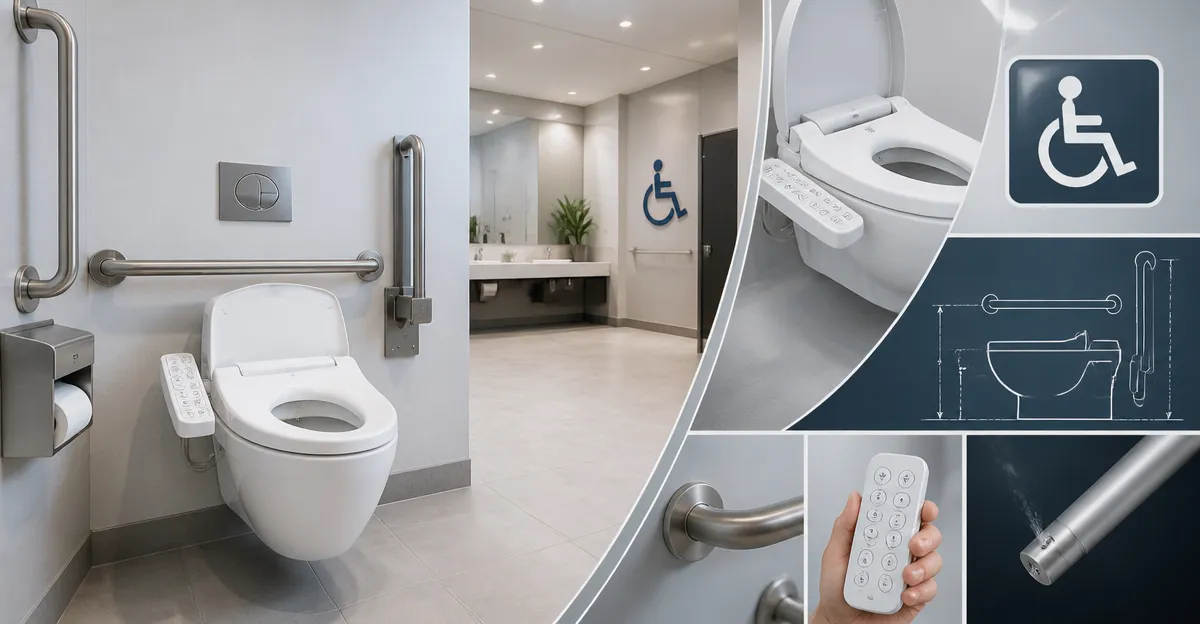
- Grab Bars: Adjacent grab bars must be installed to support users when using the bidet functions.
When evaluating a bidet seat, verify that the manufacturer provides compliance documentation or certifications that reference these criteria.
Design Considerations for Public Restrooms
Public facilities experience high traffic, which places greater demand on durability and ease of maintenance. Materials such as ABS plastic, stainless‑steel nozzles, and powder‑coated metal hinges resist corrosion and frequent cleaning cycles. Slow‑close lids reduce noise and prevent accidental slamming, a feature that also extends hinge lifespan. Additionally, non‑electric models eliminate the need for nearby power outlets, simplifying installation in older buildings.
Water pressure variability is another factor; many public water supplies fluctuate throughout the day. Choose a bidet with adjustable pressure and a self‑cleaning nozzle to maintain hygiene without manual intervention. Finally, consider the aesthetic impact—sleek designs can modernize a restroom and improve user perception of the facility.
Product Recommendations
The following products have been selected for their blend of ADA‑friendly features, durability, and positive user feedback. Each product is linked on first mention.
Non‑Electric Options
The Clirass Elongated Bidet Seat offers dual spray nozzles, a slow‑close lid, and a brass inlet that resists corrosion. With a rating of 4.6/5 from 1,532 reviews and a price of $89.99, it provides reliable performance without requiring an electrical outlet. Its adjustable water pressure and ergonomic nozzle placement satisfy both male and female users, making it a versatile choice for high‑traffic venues.
The Clirass Round Bidet Seat mirrors the elongated model’s functionality but fits round toilets, a common configuration in older public restrooms. Priced at $79.99 and rated 4.4/5 from 500 reviews, it includes a self‑cleaning mode and a quiet‑close lid, reducing maintenance time and noise levels.
Electric Options with Enhanced Comfort
The iliD Heated Bidet Seat combines an auto‑open/close lid, instant warm water, and a three‑level heated air dryer. Although it requires a nearby grounded outlet, its 32% slimmer profile and 20% larger seat area improve user comfort, especially for seniors. At $189.99 and a rating of 4.4/5 from 202 reviews, it balances advanced features with a reasonable price point for public installations.
The iliD Electric Heated Bidet Seat adds a stainless‑steel self‑cleaning nozzle and a premium ergonomic design. With a price identical to the previous iliD model ($189.99) but a higher review count (590 reviews, 4.4/5), it demonstrates strong market acceptance and durability.
For facilities seeking a top‑tier, spa‑like experience, the Bio Bidet BB2000 Bliss Seat delivers unlimited warm water, a heated seat, night light, and built‑in deodorizer. Although priced at $489.00, its 4.5/5 rating from 4,309 reviews and Forbes recognition as “Best Bidet Overall” justify the investment for premium locations such as hotels, airports, and upscale public venues.
Comparison and Selection Guide
| Feature | Clirass Elongated | Clirass Round | iliD Heated | iliD Electric Heated | Bio Bidet BB2000 Bliss |
|---|---|---|---|---|---|
| Seat Type | Elongated | Round | Elongated | Elongated | Elongated |
| Power Required | None | None | Electric | Electric | Electric |
| Heated Seat | No | No | Yes | Yes | Yes |
| Auto‑Open Lid | No | No | Yes | No | No |
| Self‑Cleaning Nozzle | Yes (Plastic) | Yes (Plastic) | ABS Plastic | Stainless Steel | Stainless Steel |
| Price (USD) | 89.99 | 79.99 | 189.99 | 189.99 | 489.00 |
| Average Rating | 4.6 | 4.4 | 4.4 | 4.4 | 4.5 |
| Installation Time | ~15 min | ~15 min | ~3 min | ~3 min | 30‑45 min (professional recommended) |
Facilities with limited electrical infrastructure should prioritize the non‑electric Clirass models. For locations that can accommodate an outlet and desire additional comfort, the iliD Heated or Electric Heated seats provide a balanced solution. The Bio Bidet BB2000 Bliss is best suited for premium environments where the highest level of hygiene and user experience is required.
Best Practices & Tips for Installation and Maintenance
- Verify ADA Clearance: Before installation, measure the clear floor space and ensure the chosen seat height complies with ADA standards.
- Use a Brass T‑Valve: All recommended models include a brass T‑valve with shut‑off capability; this prevents leaks and simplifies future maintenance.
- Secure Electrical Connections: For electric seats, install a GFCI‑protected outlet within 6 inches of the toilet to meet code requirements.
- Regular Nozzle Cleaning: Activate the self‑cleaning cycle weekly to prevent biofilm buildup, especially in high‑traffic restrooms.
- Lubricate Hinges: Apply a silicone‑based lubricant to slow‑close hinges annually to maintain quiet operation.
- Document Installation: Keep a record of part numbers, valve sizes, and wiring diagrams to expedite future service calls.
- Train Staff: Provide brief training to custodial staff on resetting controls, troubleshooting leaks, and resetting the auto‑open sensor.
Frequently Asked Questions
- Do non‑electric bidet seats meet ADA requirements? Yes, provided they have the correct seat height, reachable controls, and are installed with appropriate grab bars.
- Can an electric bidet seat be installed in a restroom without an existing outlet? An electrician can add a GFCI‑protected outlet; however, the cost should be factored into the overall budget.
- How often should the nozzle be cleaned? Most manufacturers recommend a self‑cleaning cycle after each use; a manual deep clean once per month is advisable for public settings.
- Are heated seats safe for users with medical conditions? Heated seats are generally safe, but facilities should provide clear signage and allow users to disable the heat if desired.
- What is the typical lifespan of a public‑use bidet seat? With proper maintenance, non‑electric models last 5‑7 years, while electric models with stainless‑steel components can exceed 8 years.
- Is a night light necessary in public restrooms? Night lights are optional but can improve visibility for low‑light environments, enhancing safety for visually impaired users.
- Do these seats require special cleaning chemicals? Use mild, non‑abrasive cleaners; avoid bleach or acidic solutions that can degrade plastic and metal parts.
Conclusion
Choosing an ADA‑compliant bidet seat for a public restroom involves balancing regulatory compliance, durability, user comfort, and budget. Non‑electric models such as the Clirass Elongated Bidet Seat and Clirass Round Bidet Seat provide reliable performance without electrical demands. Electric options like the iliD Heated Bidet Seat add comfort features suitable for premium facilities, while the Bio Bidet BB2000 Bliss Seat offers a spa‑like experience for high‑end venues. By following the best‑practice checklist and referencing the comparison guide, facility managers can make confident decisions that improve hygiene, accessibility, and overall user satisfaction.
Products Featured in This Guide
Clirass Elongated Bidet Seat
Price: $89.99 | Rating: 4.6/5 (1,532 reviews)
Featured for its non‑electric dual‑nozzle design, ADA‑friendly height, and quiet‑close lid, making it ideal for high‑traffic public restrooms with limited electrical infrastructure.
Clirass Round Bidet Seat
Price: $79.99 | Rating: 4.4/5 (500 reviews)
Chosen for its compatibility with round toilets, self‑cleaning nozzle, and affordable price, providing a reliable non‑electric solution for older restroom layouts.
iliD Heated Bidet Seat
Price: $189.99 | Rating: 4.4/5 (202 reviews)
Highlighted for its auto‑open/close lid, heated seat, and three‑level warm air dryer, delivering added comfort in premium public settings where power is available.
iliD Electric Heated Bidet Seat
Price: $189.99 | Rating: 4.4/5 (590 reviews)
Featured for its stainless‑steel self‑cleaning nozzle and ergonomic design, offering a durable electric option suitable for medium‑budget public facilities.
Bio Bidet BB2000 Bliss Seat
Price: $489.00 | Rating: 4.5/5 (4,309 reviews)
Selected for its luxury features—including unlimited warm water, heated seat, night light, and deodorizer—making it the premium choice for upscale public venues seeking a spa‑like experience.