Introduction
In this guide, the reader will learn how to adjust the water pressure on a bidet attachment to achieve the desired spray strength. Understanding pressure control is valuable because it influences comfort, hygiene, and water savings. The instructions apply to most non‑electric bidet models, and the guide highlights tools that simplify the process. By the end of the article, one will be able to increase or decrease pressure safely and confidently.
What You’ll Need
- A compatible bidet attachment such as the LUXE Bidet NEO 120 or the SAMODRA Ultra‑Slim Bidet.
- A flat‑head screwdriver (often included with the bidet).
- Adjustable wrench for tightening T‑adapters if needed.
- Optional: a metal‑ceramic core shut‑off valve such as the LUXE Metal T‑adapter with Shut‑off Valve for precise pressure control.
- Cleaning cloths to wipe any water after adjustment.
Step‑by‑Step Instructions
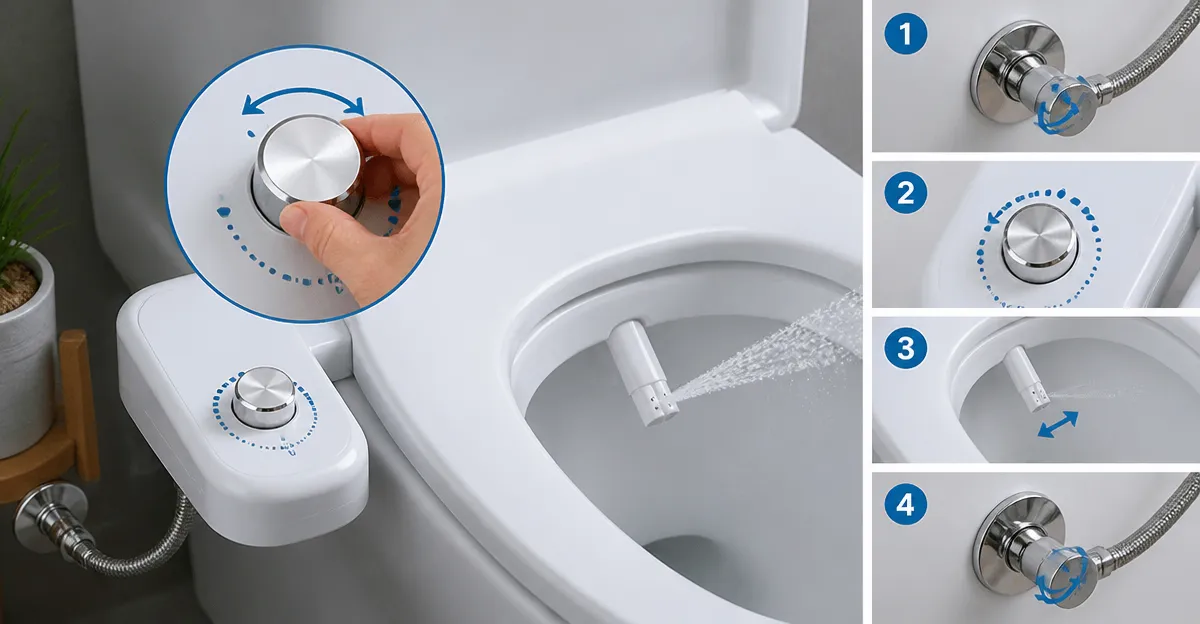
1. Identify the Pressure Control Knob
The first task is to locate the water‑pressure knob on the bidet’s control panel. On the LUXE Bidet NEO 120, the knob is a small rotary dial positioned near the nozzle guard gate. The SAMODRA Ultra‑Slim uses a similar dial but with a larger rotation arc for finer granularity. Recognising the knob is essential because it directly regulates the flow of water through the metal‑ceramic core valves, which are more durable than rubber seals.
Why this matters: A clearly identified knob prevents accidental damage to the nozzle or surrounding fittings. The metal‑ceramic cores in both LUXE and SAMODRA models provide consistent pressure changes, unlike cheaper plastic valves that can stick.
2. Adjust the Knob for Desired Strength
Turn the knob clockwise to increase pressure and counter‑clockwise to decrease it. Begin with the lowest setting and gradually increase until the spray feels comfortable. For the LUXE Bidet NEO 120, users report that the first click provides sufficient pressure for most adults, while the second click delivers a stronger stream for heavier cleaning.
The SAMODRA Ultra‑Slim features a 0‑90 degree rotation range; the water starts at 15‑20 degrees and reaches maximum at 90 degrees. This design offers a visual cue that helps users avoid overshooting the desired pressure.
Why this matters: Incremental adjustments reduce the risk of an unexpectedly strong jet, which can cause discomfort or splash. The self‑cleaning nozzle guard on the LUXE model ensures the nozzle retracts after each use, protecting the internal ceramic valve from debris.
3. Test the Spray in Real Time
After each adjustment, sit on the toilet and activate the bidet for a few seconds. Observe the water arc and note any overspray. If the stream is too weak, increase the knob by one notch; if it is too forceful, reduce it slightly. Both the LUXE and SAMODRA units include a self‑cleaning function that can be engaged before testing to clear any residual debris from the nozzle.
Why this matters: Real‑time testing confirms that the pressure setting matches personal comfort and hygiene needs. The self‑cleaning feature, present on both models, extends nozzle life and maintains consistent pressure over time.
4. Fine‑Tune with an Optional Shut‑off Valve
For households with high municipal water pressure, the built‑in knob may not provide enough reduction. Installing a dedicated shut‑off valve, such as the LUXE Metal T‑adapter with Shut‑off Valve, allows precise control of the water entering the bidet.
Installation steps:
- Turn off the water supply at the toilet’s shut‑off valve.
- Detach the existing supply line from the bidet.
- Thread the metal T‑adapter onto the supply line using an adjustable wrench.
- Reconnect the bidet hose to the adapter.
- Gradually open the main supply and adjust the adapter’s lever until the desired pressure is achieved.
Why this matters: The metal‑ceramic core valves in the LUXE model work best with stable upstream pressure. A dedicated shut‑off valve prevents sudden pressure spikes that could damage the nozzle or cause leaks.
5. Secure All Connections and Verify No Leaks
Once the pressure is set, ensure that all hose connections are tight. The stainless‑steel braided hoses supplied with the SAMODRA Ultra‑Slim and the steel hoses on the LUXE model resist kinking and provide a leak‑free seal. Gently tug each hose to confirm it is firmly attached.
If a leak appears, turn off the water, tighten the connection a quarter turn, and retest. Persistent leaks may indicate a damaged washer, which can be replaced with a standard rubber washer from a hardware store.
Why this matters: Properly sealed connections protect the bathroom floor from water damage and maintain consistent pressure. The high‑quality braided hoses in both products reduce the likelihood of wear compared with plastic alternatives.
Tips & Pro Tips
- Start with the lowest pressure setting and increase gradually; comfort is subjective.
- Activate the self‑cleaning nozzle before each use to keep the ceramic valve free of mineral buildup.
- If you share the bathroom with children, set the pressure to a lower level and supervise initial usage.
- For colder climates, the cool water from the LUXE NEO 120 feels refreshing; however, you may add a small insulated hose to prevent freezing in winter.
- Use the optional LUXE Metal T‑adapter with Shut‑off Valve to quickly stop water flow for maintenance without affecting the toilet’s supply.
Troubleshooting
| Problem | Possible Cause | Solution |
|---|---|---|
| Pressure does not change | Knob is stuck or valve is clogged | Engage the self‑cleaning function, then gently rotate the knob while water is flowing. |
| Water leaks from hose connection | Loose fitting or damaged washer | Turn off water, tighten the connection, replace washer if necessary. |
| Spray is too weak even at maximum | High municipal pressure reduced by upstream regulator | Install the LUXE Metal T‑adapter with Shut‑off Valve to raise upstream pressure. |
Conclusion
Adjusting water pressure on a bidet attachment is a straightforward process that enhances comfort, hygiene, and water efficiency. By locating the control knob, making incremental changes, testing the spray, and optionally using a shut‑off valve, one can achieve the perfect pressure for any user. The guide also provided practical tips and troubleshooting steps to address common issues. Armed with this knowledge, readers can enjoy a cleaner, greener bathroom experience.
Products Mentioned in This Guide
Frequently Asked Questions
How do I adjust the water pressure on a non‑electric bidet attachment?
Locate the pressure‑adjustment screw on the T‑adapter, turn clockwise to increase pressure or counter‑clockwise to decrease it, then test the spray.
What tools are required to change the water pressure?
A flat‑head screwdriver for the adjustment screw and an adjustable wrench for tightening any T‑adapters.
Can I use a shut‑off valve for more precise pressure control?
Yes, installing a metal‑ceramic core shut‑off valve lets you fine‑tune flow and quickly stop water if needed.
Is it safe to increase the pressure beyond the factory setting?
Increase only modestly; excessive pressure can cause leaks or uncomfortable spray and may damage the bidet.
What should I do if the water pressure remains low after adjustment?
Check for clogged spray holes, ensure the supply valve is fully open, and verify that the T‑adapter is securely tightened.