Power Backup Options for Electric Bidet Seats: The Ultimate Guide to UPS, Battery & Generator Solutions
Introduction
Modern electric bidet seats provide comfort, hygiene, and independence, but they rely on a steady electrical supply. Power interruptions can render features such as heated seats, warm water washes, and automatic flushing unavailable, reducing the user experience and, in some cases, compromising accessibility. This guide explains the various backup power solutions—uninterruptible power supplies (UPS), battery systems, and portable generators—so readers can maintain bidet functionality during outages. Throughout the guide, specific products are highlighted to illustrate how each solution integrates with popular bidet models.
Background & Context
Electric bidet seats typically require 120 V AC power and a modest amount of current (often under 2 A). The most common power‑draw components are the water‑heating element, the control electronics, and any auxiliary features such as air dryers or night lights. While a brief outage may not affect a unit that stores heat in a tank, models that heat water on demand—such as the TOTO Washlet A2—can lose functionality until power returns. Understanding the power profile of a bidet seat is essential when selecting a backup solution.
Understanding Power Needs for Electric Bidet Seats
Bidet seats fall into two broad categories:
- Tank‑style heating: Stores a limited amount of warm water; performance degrades as the tank empties.
- On‑demand heating: Heats water continuously, requiring a more stable power source.
Both categories benefit from a backup that can supply at least 150 W for a few minutes—enough time to complete a wash cycle. Features such as heated seats and air dryers increase the load, so a safety margin of 30‑50 % is advisable. Users should also consider the frequency of outages in their region; a UPS may be sufficient for occasional short outages, whereas battery packs or generators become attractive for longer disruptions.
Uninterruptible Power Supplies (UPS)
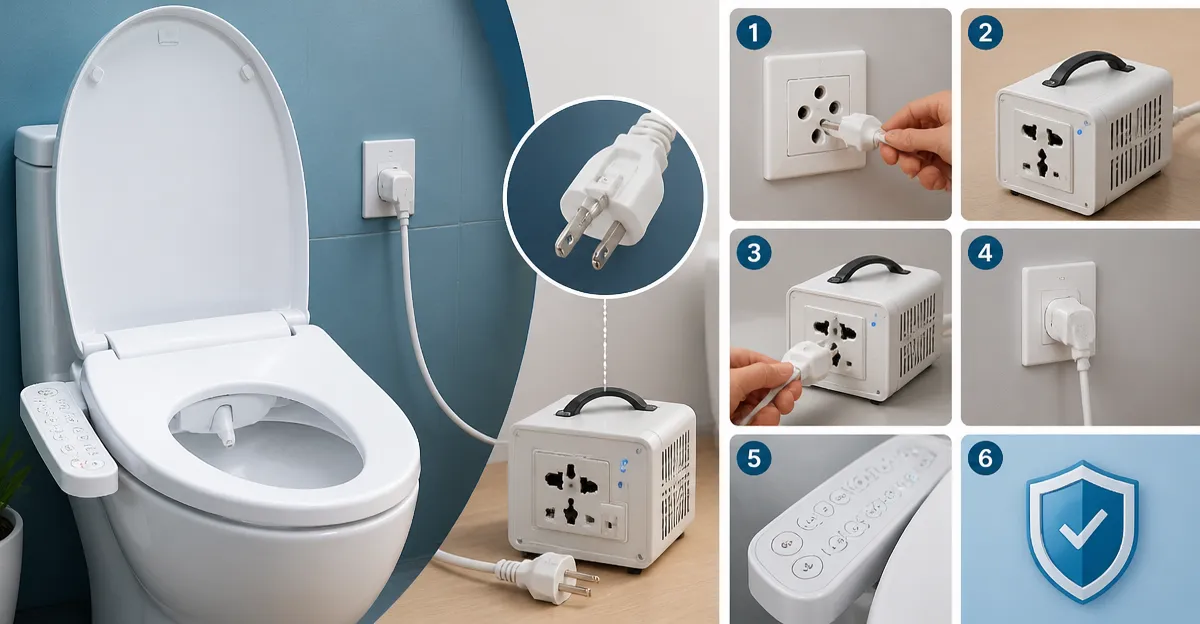
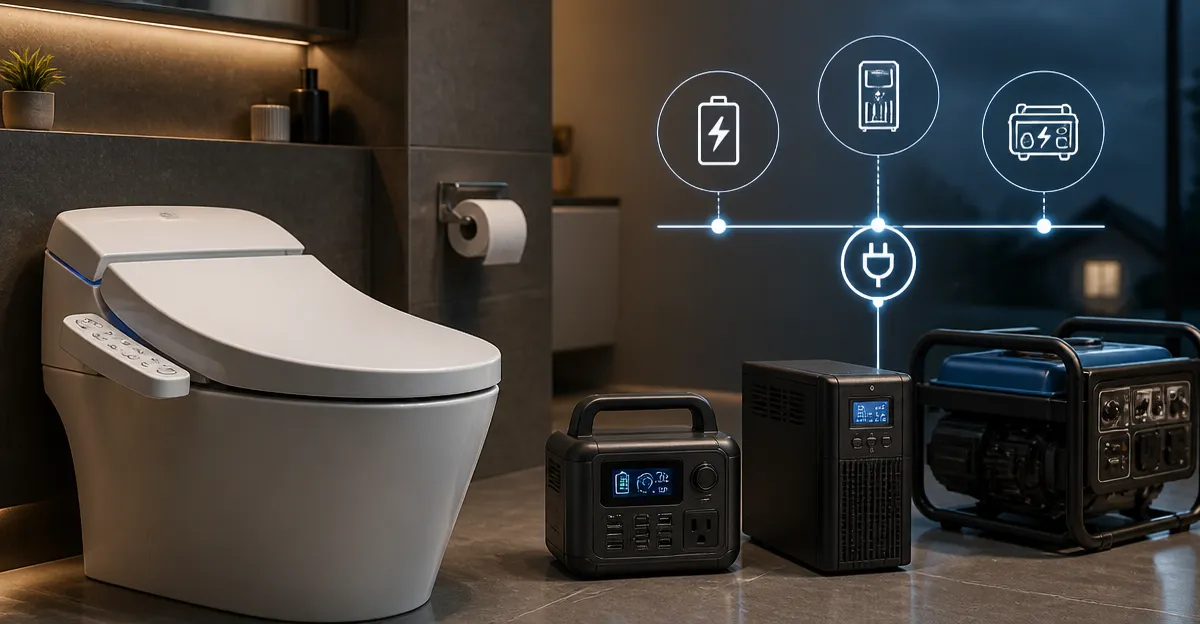
A UPS provides instantaneous power from an internal battery when the mains fails. It smooths voltage fluctuations, protects sensitive electronics, and typically offers 5‑15 minutes of runtime at full load. For a bidet seat, a 300‑500 VA UPS with a pure‑sine wave output is ideal.
Key considerations when choosing a UPS for a bidet:
- Capacity: Verify that the VA rating exceeds the bidet’s maximum draw (often 150‑200 W). A 400 VA unit offers a comfortable buffer.
- Battery type: Sealed lead‑acid batteries are common and inexpensive; lithium‑ion batteries provide longer life and lighter weight.
- Runtime: Aim for at least 8 minutes at 100 % load; this covers the typical wash cycle plus a few minutes of standby.
- Form factor: A compact, wall‑mountable UPS saves bathroom floor space.
While UPS units are not product‑specific, they pair well with the TOTO Washlet A2, which uses a tank‑style heater and benefits from the short‑term power continuity a UPS provides.
Battery Backup Systems
Battery backup systems consist of a larger external battery pack that can be wired to the bidet’s power inlet. They are useful for households that experience longer outages (30 minutes to several hours). Two main approaches exist:
- Standalone DC‑AC inverter kits: Connect a deep‑cycle battery to an inverter that supplies 120 V AC. This setup can power multiple bathroom accessories simultaneously.
- Integrated battery‑backed UPS: Some manufacturers offer UPS units with swappable battery packs, extending runtime without additional wiring.
The Bio Bidet BB2000 Bliss features an air dryer and unlimited warm water, increasing its power draw to roughly 180 W. A 12 V, 100 Ah battery paired with a 300 W pure‑sine inverter can sustain the Bliss for up to 45 minutes, ensuring full functionality during extended blackouts.
Generator Solutions
Portable generators provide the most robust backup, capable of powering an entire bathroom suite—including lighting, exhaust fans, and multiple bidet seats. When selecting a generator, consider:
- Power rating: A 1500‑2000 W generator comfortably runs a bidet seat and ancillary devices.
- Noise level: Look for models rated under 60 dB for indoor use or placement in a garage.
- Fuel type: Propane offers cleaner operation; gasoline is more common but requires proper ventilation.
- Safety features: Automatic shut‑off on low oil and overload protection are essential for bathroom environments.
The KERDE P30B includes both a heated seat and a warm‑air dryer, drawing roughly 160 W. A modest generator can keep this seat operational while also powering the bathroom’s exhaust fan, improving overall air quality during a power loss.
Integration with Specific Bidet Models
1. TOTO Washlet A2
The TOTO Washlet A2 offers a heated SoftClose® seat, adjustable warm‑water spray, and a self‑cleaning wand. Because its water heater is tank‑based, it can continue to provide warm water for a short period after a power loss, but the seat heating and control panel require electricity. Pairing the Washlet with a 400 VA UPS ensures that the seat remains warm and the control panel stays responsive during brief outages.
2. Bio Bidet BB2000 Bliss
The Bliss model includes unlimited warm water, a warm‑air dryer, night light, and deodorizer—all of which increase power consumption. A battery backup system with a 12 V, 100 Ah battery and a 300 W inverter is recommended to maintain full functionality for at least 30 minutes. Users who prioritize uninterrupted comfort should also consider a UPS with a higher VA rating (600 VA) for added safety.
3. KERDE P30B
The KERDE P30B provides dual‑control options, a heated seat, warm‑air dryer, and LED night light. Its power draw is comparable to the Bliss, making a 300 W inverter‑battery combo an effective solution. Because the P30B includes both side‑panel and remote controls, users can continue to adjust settings even if the main power is lost, provided the backup supplies power to the control circuitry.
4. HOROW HR‑N30 Non‑Electric Bidet Toilet
The HOROW model operates without electricity, using battery‑powered auto‑flush and cold‑water spray. While it does not require a UPS or inverter, its battery‑flush system benefits from regular battery replacement to guarantee reliable operation. This product demonstrates that a non‑electric design eliminates the need for complex backup solutions, making it an attractive option for off‑grid or low‑budget installations.
Comparison & Selection Guide
| Feature | UPS | Battery Backup | Generator |
|---|---|---|---|
| Typical Runtime | 5‑15 minutes | 30‑60 minutes | Unlimited (fuel‑limited) |
| Installation Complexity | Plug‑and‑play | Moderate (battery + inverter) | High (fuel, ventilation) |
| Noise | Silent | Silent | Variable (60‑70 dB typical) |
| Cost (USD) | $150‑$300 | $300‑$600 | $400‑$1200 |
| Best For | Short outages, sensitive electronics | Extended outages, multiple bathroom devices | Full‑home backup, remote locations |
When choosing a solution, assess the typical outage duration in your area, the power draw of your bidet model, and any additional bathroom appliances you wish to keep running.
Best Practices & Tips
- Calculate exact power draw: Check the bidet’s specifications (usually listed in the user manual) and add a 20‑30 % safety margin.
- Test your backup regularly: Simulate a power loss to verify that the UPS or battery system starts correctly and that the bidet functions as expected.
- Maintain batteries: For battery‑backed systems, keep terminals clean and replace batteries every 3‑5 years to avoid unexpected failure.
- Use pure‑sine wave inverters: They provide cleaner power, protecting the bidet’s electronics from harmonic distortion.
- Consider moisture‑resistant enclosures: Place UPS or inverter units in a waterproof cabinet if installed near the bathroom.
- Plan for ventilation with generators: Operate generators outdoors and use heavy‑duty extension cords rated for bathroom use.
Frequently Asked Questions
- Will a UPS extend the warm‑water supply of a tank‑style bidet?
- Yes, a UPS keeps the heating element active, preventing the tank from cooling during short outages.
- Can I use a standard home UPS with a bidet that has a built‑in dryer?
- Only if the UPS’s VA rating exceeds the combined load of the seat, dryer, and any night‑light. A 600 VA unit is recommended for models like the Bio Bidet BB2000 Bliss.
- How long does a 12 V, 100 Ah battery last with a 180 W bidet?
- Approximately 45‑50 minutes, assuming 80 % inverter efficiency.
- Is a generator safe to run inside a bathroom?
- No. Generators must be placed outdoors with proper ventilation to avoid carbon monoxide buildup.
- Do non‑electric bidets like the HOROW model need any backup?
- Their auto‑flush function relies on AA batteries; regular replacement ensures reliability, but no external power source is required.
Conclusion
Electric bidet seats enhance hygiene and comfort, yet they depend on uninterrupted electricity. By assessing the power requirements of each model and selecting an appropriate backup—whether a UPS for brief interruptions, a battery system for longer outages, or a generator for full‑home resilience—users can preserve the full suite of bidet features regardless of grid stability. The recommendations provided for the TOTO Washlet A2, Bio Bidet BB2000 Bliss, KERDE P30B, and HOROW HR‑N30 illustrate how each solution aligns with specific product capabilities, ensuring that every household can enjoy reliable, luxurious bathroom experiences.
Products Featured in This Guide
TOTO Washlet A2
Price: $249.00 | Rating: 4.6/5 (986 reviews)
Featured for its tank‑style heating and high reliability, making it an ideal candidate for UPS backup during short outages.
Bio Bidet BB2000 Bliss
Price: $489.00 | Rating: 4.5/5 (4,375 reviews)
Featured for its unlimited warm water, air dryer, and premium features that benefit from extended battery backup or high‑capacity UPS.
KERDE P30B
Price: $149.99 | Rating: 4.3/5 (270 reviews)
Featured for its dual control options and energy‑saving design, illustrating how a modest inverter‑battery pack can keep it operational.
HOROW HR-N30
Price: $299.00 | Rating: 4.2/5 (35 reviews)
Featured as a non‑electric alternative that eliminates the need for external backup, highlighting the value of battery‑powered auto‑flush technology.